
Updates
New article: Cognitive warfare and the limits of classical crisis communication models

24/08/2026, 09:54
My article “Cognitive Warfare and the Limits of Classical Crisis Communication Models in an Environment of Manipulable Facts” was published in the Canadian Journal of Business and Information Studies (Vol. 8, Issue 4, 2026).
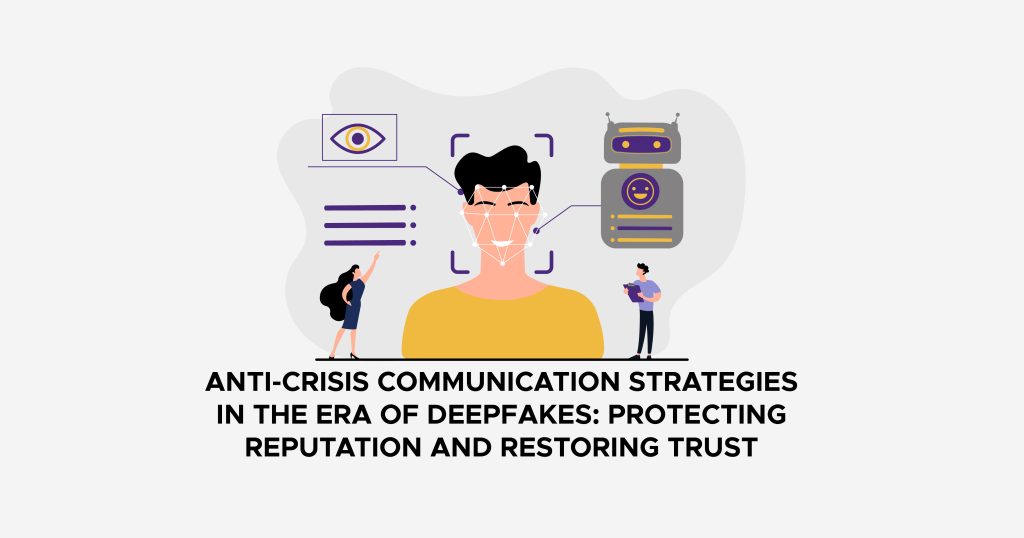
Cognitive warfare has expanded beyond military and intelligence operations and entered the corporate environment. Its primary target is not a single fake or falsehood, but the audience’s ability to evaluate evidence and trust institutions, organizations, and individuals. Deepfakes, cloned voices, fabricated documents, and coordinated dissemination are tools within a broader operation aimed at undermining judgment itself.
Classical crisis communication models are built on a simple logic: establish the facts, respond quickly, and correct misinterpretations. In this article, I examine why this logic breaks down when the facts themselves are attacked. When audio and video lose their status as intuitive evidence, response speed ceases to be the primary defense. A quick refutation without a visible verification process can even increase distrust. This article proposes a corporate model for responding to cognitive attacks. It replaces improvised responses with a step-by-step logic: signal capture, verification triage, attribution assessment, stakeholder engagement through authenticated channels, and resilience analysis. Crisis communications under cognitive attacks become evidence management, and not just reputation management.
This is my third peer-reviewed article on the intersection of crisis communications and artificial intelligence.
Full text available: https://doi.org/10.34104/cjbis.026.07020710

A new study by Ali Hajizade has been published: Crisis Communications from the Pre-Internet Era to Generative AI

Ali Hajizade Receives Millionaire Concept Award for Transformative Contributions to PR
New Research by Ali Hajizade on Crisis Communications in the Era of Deepfakes